It started with one post, a spreadsheet, and a lot of people who wanted to help.
I started posting on LinkedIn — one post a day, mostly for students and juniors trying to land a first job in tech. How to write a CV nobody skims past. Who to talk to. How to network.

no plan. just posting.
People began writing to me privately. For advice, for tips, for how to actually get hired in this industry. I answered everyone I could, and then I started posting about the individual people who had written to me: meet X, here is what they can do, does anyone have something for them?
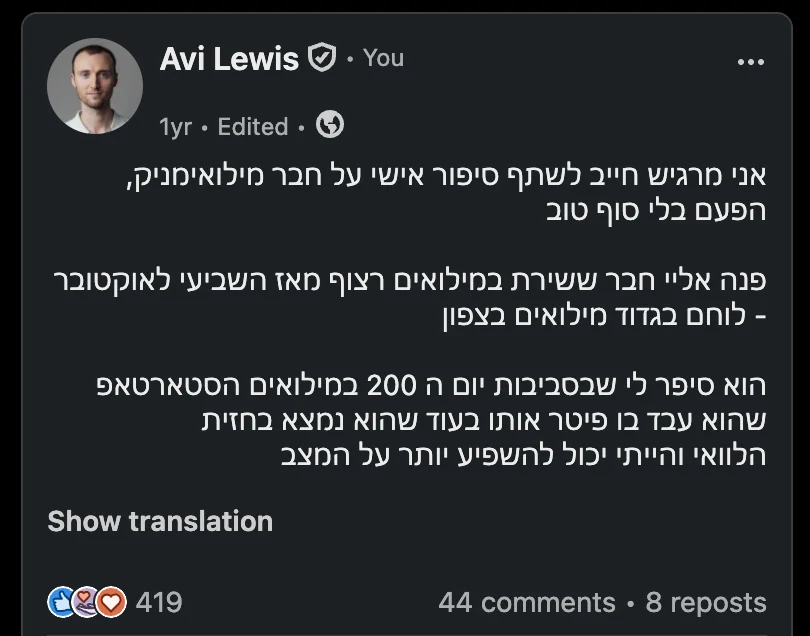
I never stopped doing it. The post here is from years later — after October 7th.
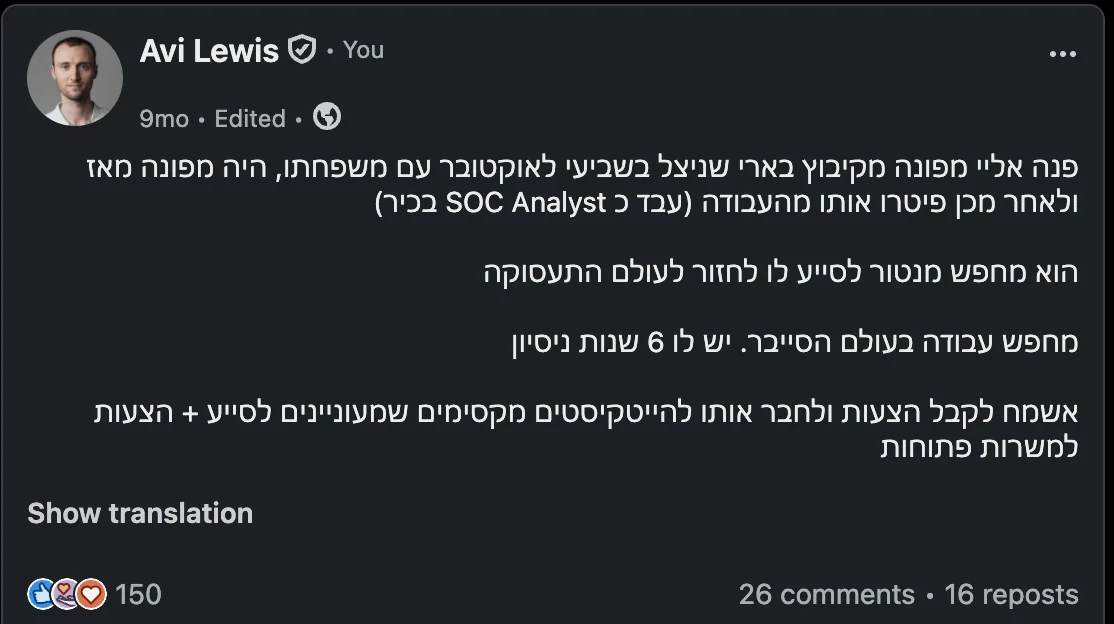
helping a job seeker who survived Oct 7th in Kibbutz Be’eri
It became a thing. More messages than I could hold in my head, let alone answer. I opened an Excel. People filled in their own details, and I sent the link to every recruiter I knew.
And it worked. People got hired off a Google Sheet.
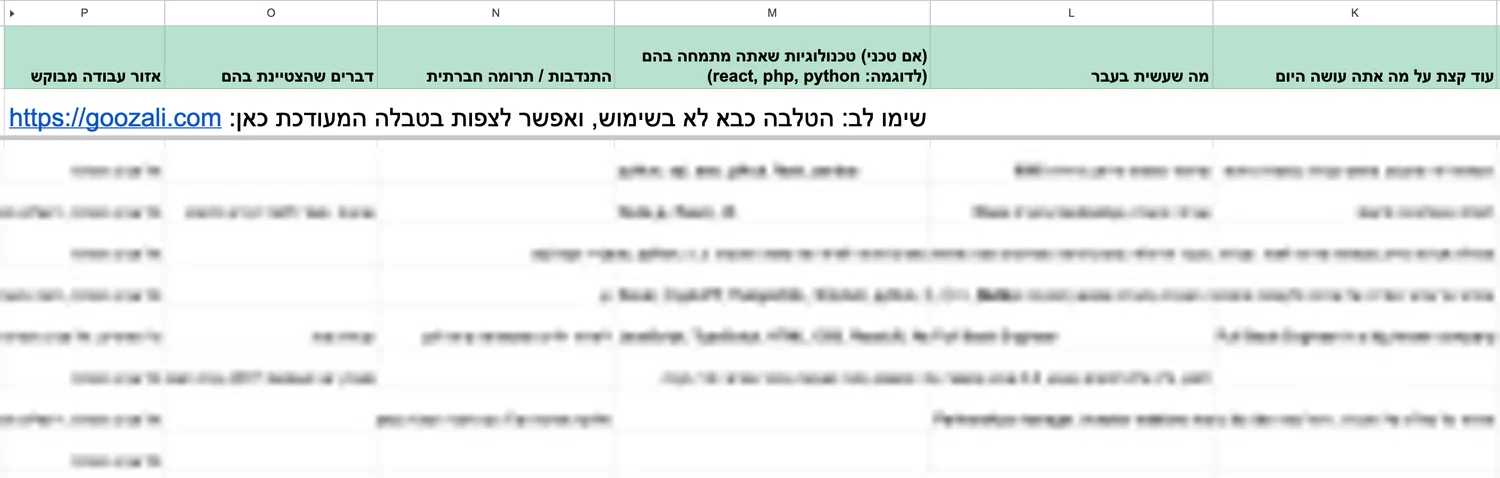
the whole product was a google sheet
I sat down with Tom Orbach, a legend of a man and one of the best Growth Marketers in Israel, and asked whether I should build an actual site. He said yes. I asked what to call it — israeli-hitech-jobs.com? He said no: pick a word that means nothing at all, and if the .com is free, buy it.
So I picked the nickname my wife sometimes calls our kids. גוזל — gozal — a baby chick. Goozali.
The .com was available. That was the entire naming process.
a nickname from the kitchen table
The first site was about as simple as a site can be. One cute baby hatchling, one heading, a row of underlined links — and behind them, the tables moved into Airtable.
Look at those links, though. Job seekers. Open roles. People who want to help. Companies. Salary ranges. The group chats. Everything this site does today, somebody had already asked for by then.
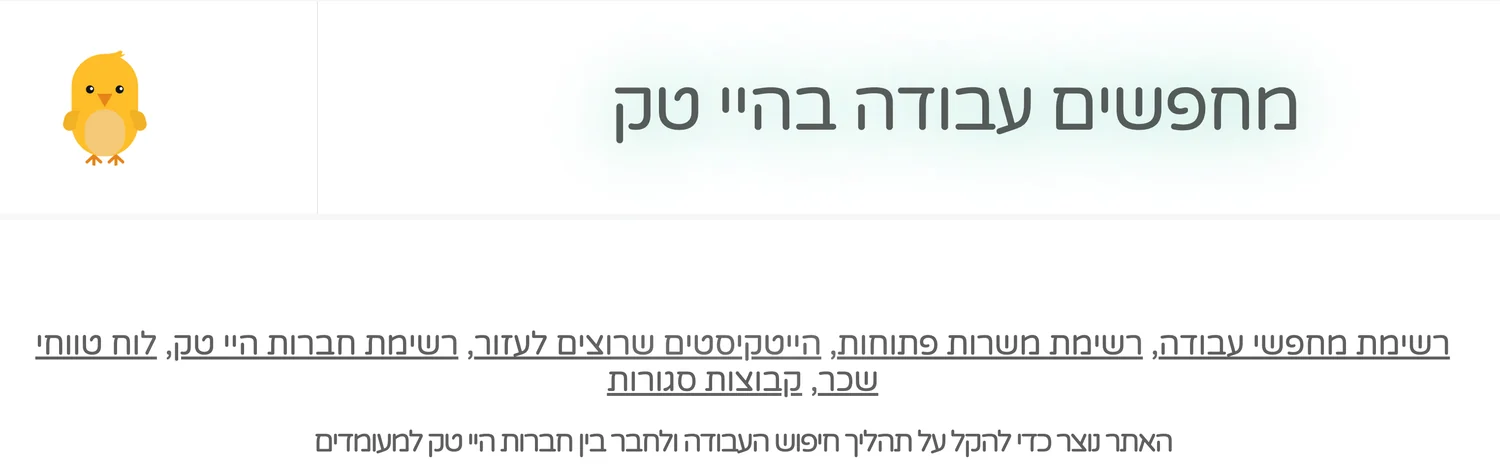
everything we do today, already on the list
Thousands of people across Israeli tech left their details so recruiters could find them and get in touch — what they do now, what they did before, what they are looking for, and how many years they have behind them.
It was the same spreadsheet as before, just bigger, and with a filter on it.
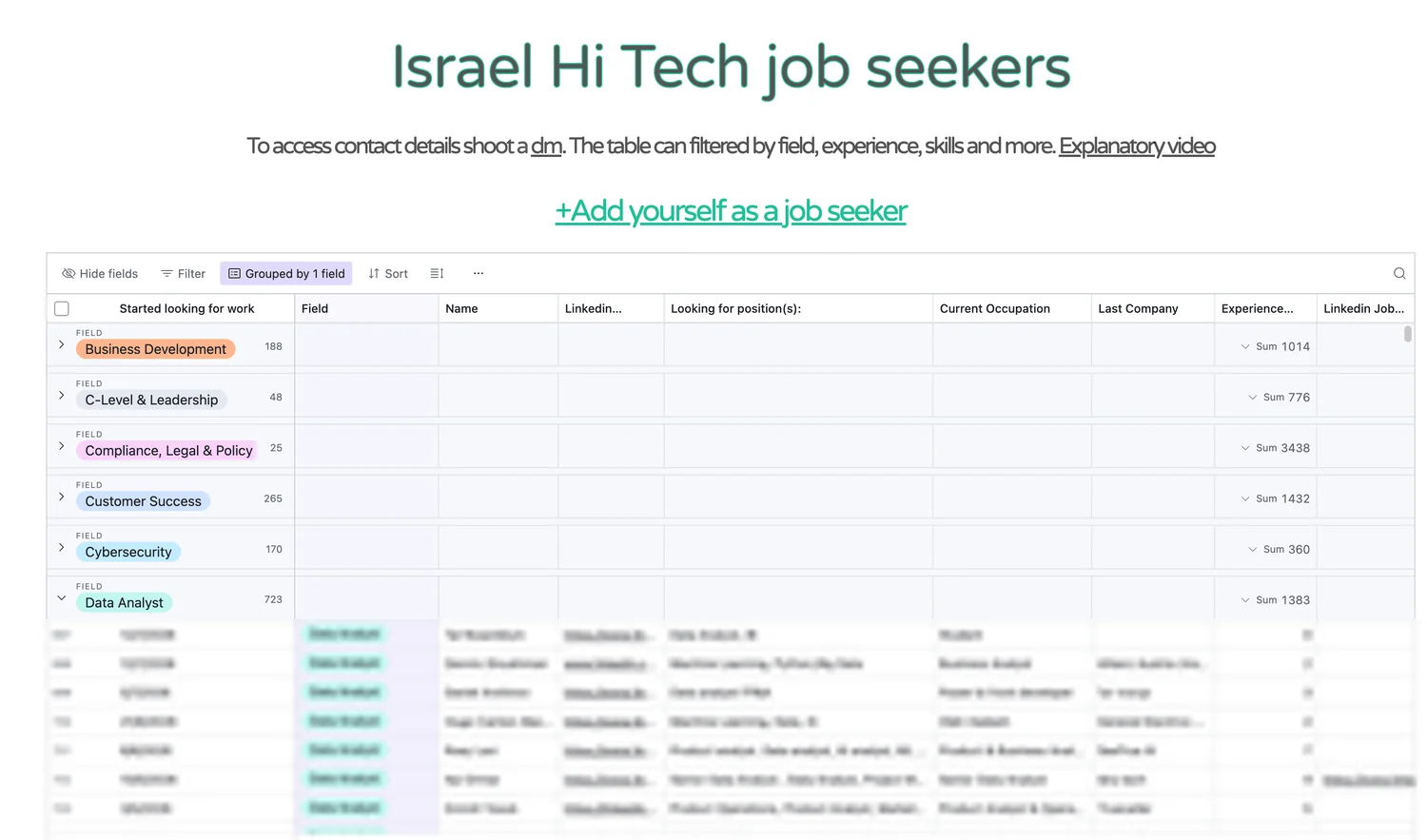
people put themselves out there. that takes something.
It started as a list of people. It became a list of roles as well — crowdsourced, because recruiters and hiring managers simply started adding their own.
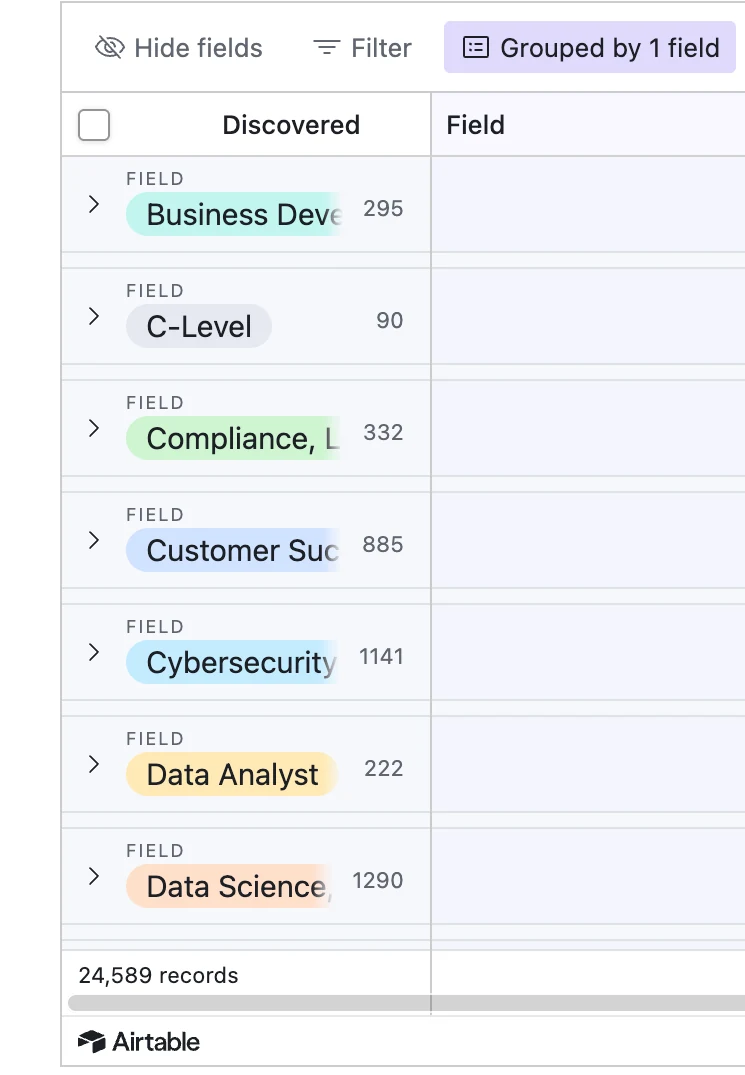
crowdsourced with love
After October 7th the messages changed. Reservists back from months of rotation. People who had been out of their homes. Nearly all of them looking for work, most of them starting from zero.
And then something I had not expected. People wrote in wanting to help. Engineers, managers, recruiters — offering hours they did not really have. CV reviews, referrals, mock interviews, coffee with someone who just needed a plan.
So a table went up for them too, somewhere to offer help.
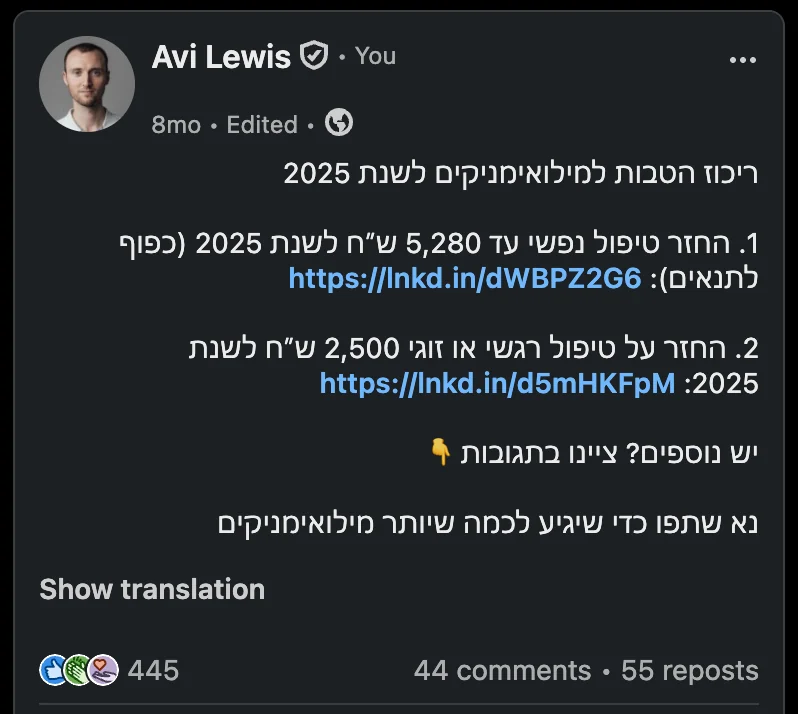
we have the sweetest tech ecosystem!
Salary ranges, so nobody walks into a negotiation blind. A table of companies. And links to the places Israeli tech hiring actually happens — the WhatsApp groups, the closed Facebook groups, the Telegram channels you only find out about if somebody adds you.
the stuff you only learn from a friend
This is the part you are standing in. A real board, a live map, and an agent that surfaces roles for you and gets you ready for the interview.
The idea has not changed since the first spreadsheet: get as many people as possible into work in Israeli tech.
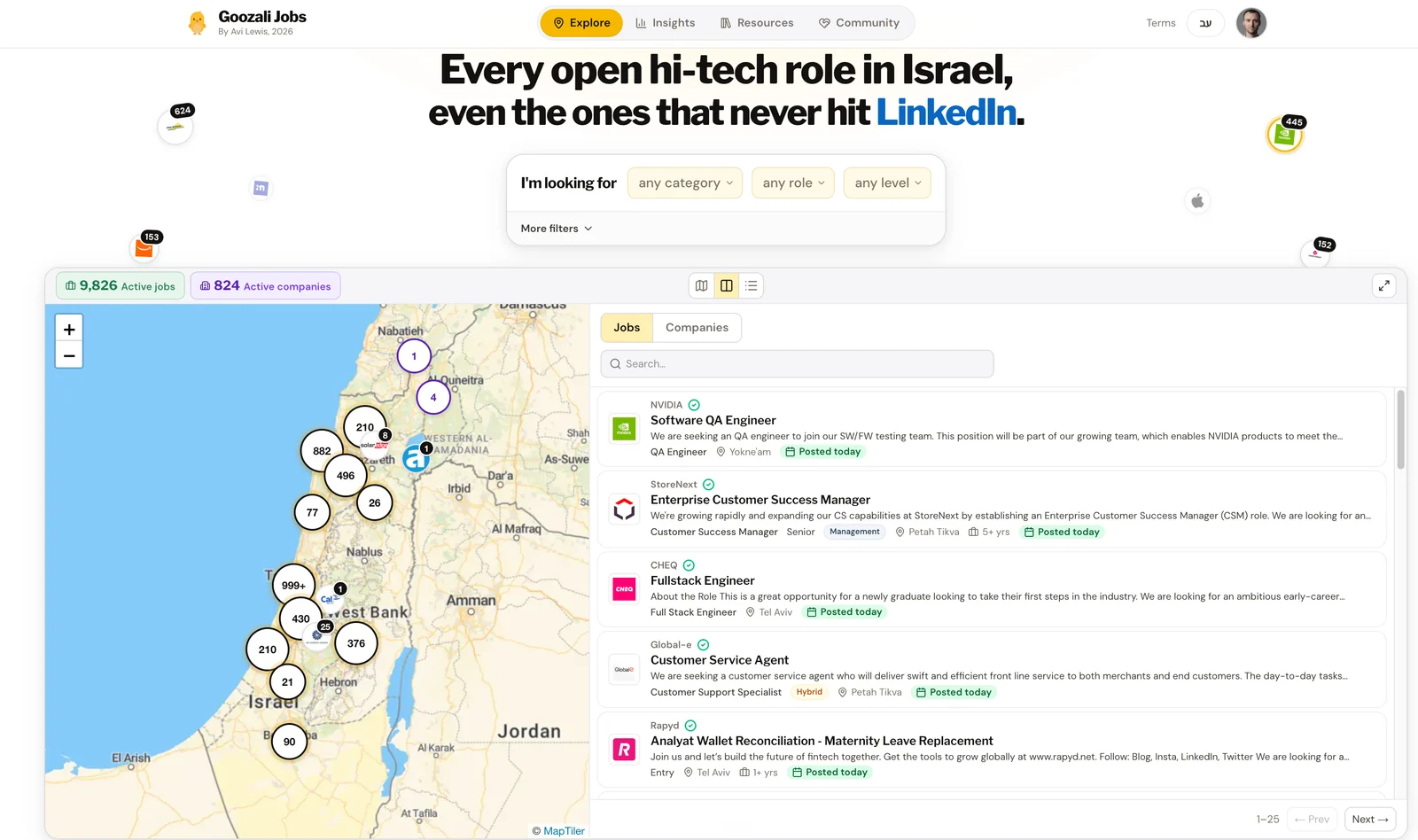
bigger, better — same warm community